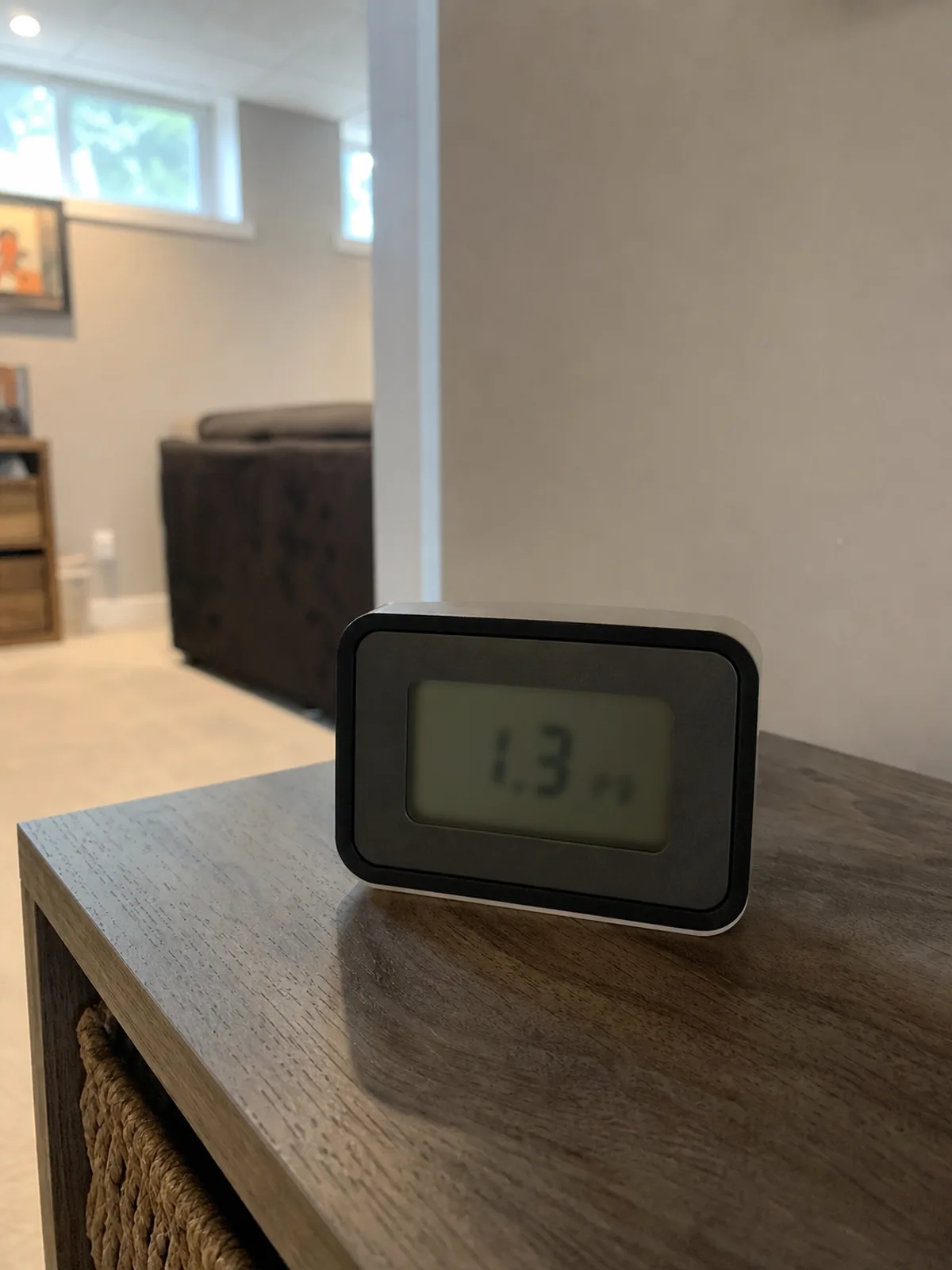
Why testing is the only way to know
Radon is invisible, odorless, and tasteless — there is no symptom, smell, or house feature that reveals it. Two identical houses next door to each other can test wildly differently depending on the soil pocket underneath, the tightness of the slab, and how the house breathes. Lancaster County sits in EPA Zone 1 and roughly half of Nebraska homes test at or above the 4.0 pCi/L action level, but "roughly half" means the only way to know which half your house is in is a test. It's one of the least expensive pieces of information you can buy about your home.
Kinds of tests and when each fits
Short-term tests run 2 to 7 days and are the standard for real estate transactions and quick answers — charcoal kits and continuous radon monitors both fall in this category, with monitors producing hour-by-hour data that also flags whether closed-house conditions were maintained. Long-term tests run 90 days or more and capture the seasonal swing, which matters in Nebraska: winter readings run higher because homes are sealed tight and the frozen ground pushes more gas toward the foundation. A summer short-term result just under 4.0 is a classic case where a longer test, or a winter retest, tells the real story.
- First-time test: you've never checked the house — a short-term test answers the basic question
- Transaction verification: a sale result seems surprisingly high or low and a second measurement settles it
- Borderline follow-up: a 2–4 pCi/L result deserves a winter or long-term look before deciding
- Post-mitigation retest: a new system was installed and the drop needs to be documented
The retest: how a mitigation system gets verified
A mitigation system isn't finished when the fan turns on — it's finished when a retest shows the number came down. Post-mitigation testing is typically done no sooner than 24 hours after the system starts running, under closed-house conditions, and the result becomes the documentation a real estate transaction needs or simply the proof you keep with the house. If a retest ever comes back high with a running system, that's a repair conversation, not a shrug — see the system repair page.
Testing rules worth knowing in Nebraska
Nebraska licenses radon measurement professionals through the Department of Health and Human Services, and transaction tests generally follow closed-house protocols: windows shut, doors closed except for normal coming and going, for 12 hours before and during the test. Tests are placed in the lowest lived-in level of the home — a basement rec room counts; an unused dirt-floor cellar doesn't. If a past result was taken with windows open in April, it may have understated your real exposure, which is a common reason for surprise later.
What happens after you call or request a quote
Say which situation you're in — never tested, verifying a transaction result, or retesting after mitigation — and where the house is. Scheduling and the right test type get sorted in that conversation. If your result is already in hand and it's high, you don't need another test first: bring the number to a mitigation quote conversation instead.