The honest framing
Most single-family radon mitigation systems fall within a fairly predictable range — this is standardized work with known materials, not open-ended construction. What decides where in the range your house lands is almost entirely what's under your floors and how the pipe gets from there to above your roof. None of the factors below require you to investigate anything before calling; they're listed so the quote conversation makes sense when you have it.
Foundation type: the biggest variable
A full basement with a single slab is the simplest case and anchors the low end of the range. A slab-on-grade home is similar, though coring the suction point placement takes more thought without a basement to work from. Crawl spaces add membrane sealing work, which is labor-intensive by nature. Combination foundations — basement plus crawl space, basement plus slab addition — are the main reason quotes climb, because each foundation section may need its own suction treatment to bring the whole house down. Lincoln has plenty of all four types, from Near South pre-war homes to south Lincoln walkouts to acreage properties with a bit of everything.
The suction point: sump pit or cored slab
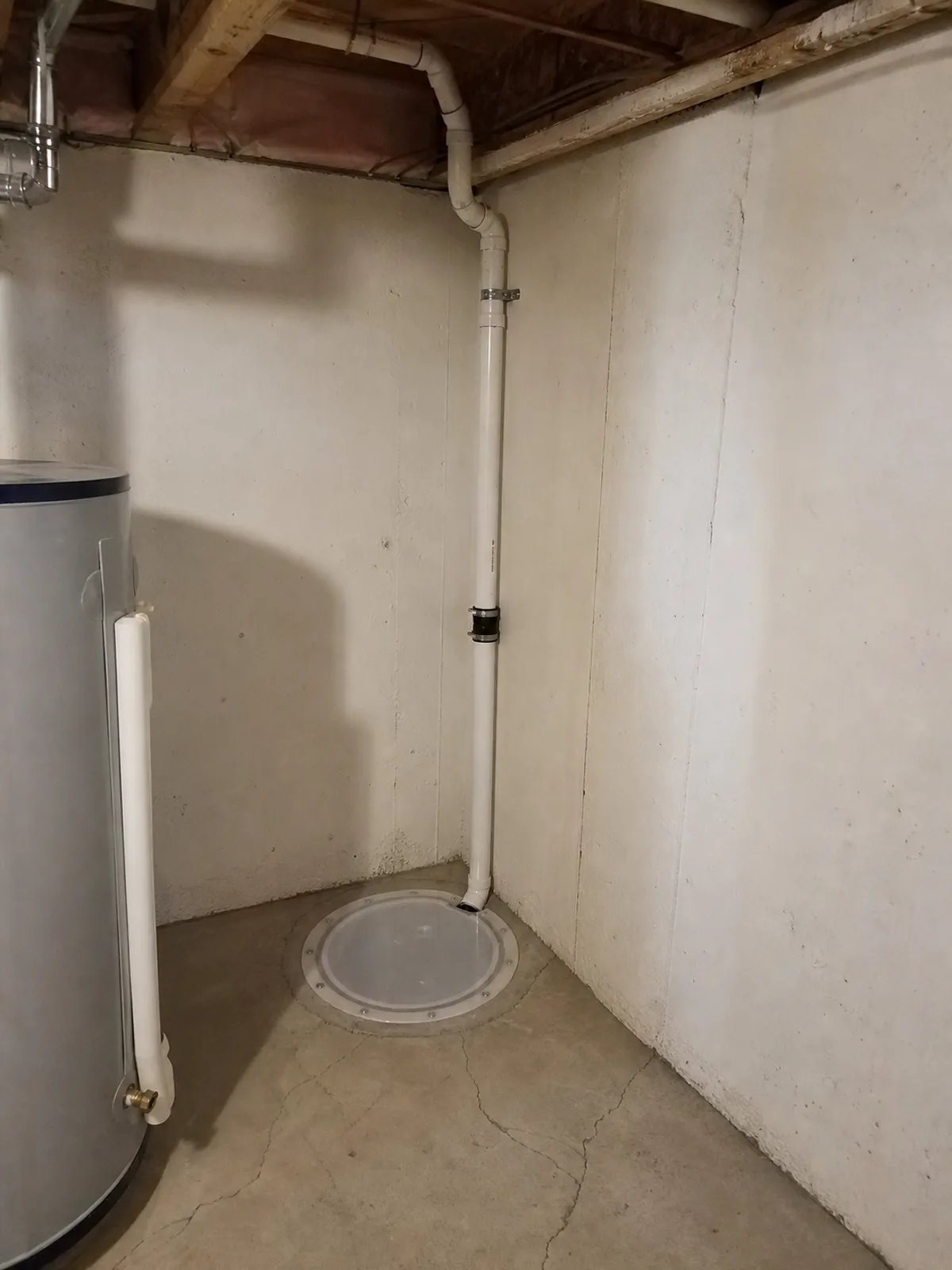
If your basement has a sump pit, it can often be sealed with an airtight lid and used as the suction point — the pit already reaches the drainage layer under the slab, which is exactly where the system wants to pull from. No pit means coring a hole through the slab and sometimes excavating a small suction cavity beneath it, particularly in tight clay soils where suction doesn't travel as far. Pit-as-suction-point installs tend to sit lower in the range.
Pipe routing: attic or exterior
The pipe has to travel from the lowest level to an exhaust point above the roofline. An exterior route up a side or rear wall is usually the shorter, simpler path. An interior route through closets and the attic hides the pipe completely and keeps the fan out of the weather, but takes more labor to run cleanly through the house. Two-story homes mean longer runs either way. Neither choice is wrong — it's a preference-and-layout question that affects the quote modestly.
Sealing and the smaller line items
Accessible slab cracks, floor joints, sump lids, and utility penetrations get sealed as part of a proper install — it's what makes the fan's suction efficient. A basement with a badly cracked slab or an unsealed sump takes more sealing time. Fan choice matters a little too: tight soil or long runs sometimes call for a higher-suction fan. And if a newer home already has passive rough-in piping from the builder, the math flips in your favor — activating an existing run with a fan is meaningfully less than a full installation.
Why there's no instant price on this page
Because an honest one doesn't exist without knowing your foundation. A number quoted blind either pads for the unknowns or gets revised later — neither serves you. What does exist is a fast path to a real figure: your test number, your foundation type, and whether you have a sump pit, shared in one phone call or the quote form. For a standard single-foundation home, that conversation gets most of the way to a quote; combination foundations and crawl spaces may need a look at the house first, and you'll be told which case you're in right away.