Why crawl spaces need a different system
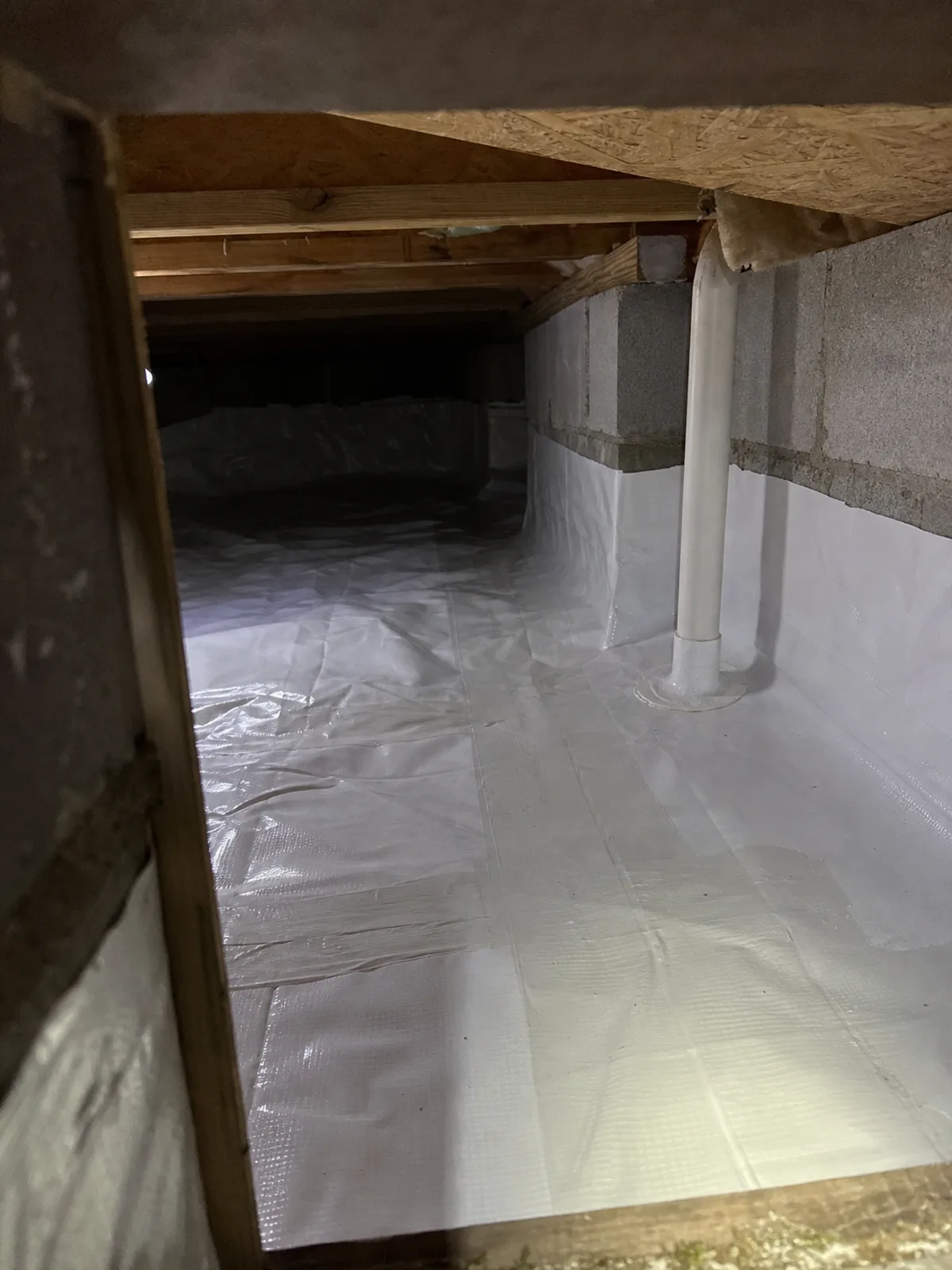
A standard mitigation system pulls soil gas from beneath a concrete slab — the slab itself acts as the lid. A crawl space has no lid: the soil is exposed, and radon rises straight off it into the air under your floor, then up into the house through gaps, ducts, and the floor itself. There's nothing to depressurize until a barrier is created. That barrier is a heavy-gauge membrane sealed across the entire crawl space floor and up the foundation walls, with the suction pipe drawing from underneath it. The technique is called sub-membrane depressurization, and once the membrane is sealed, the fan does the same job it does under a slab.
Where these homes show up around Lincoln
Crawl spaces are most common in older Lincoln housing stock — pre-war homes near downtown, the Near South, and University Place — and in additions, where a room was built out over a crawl space next to an original basement. Acreages and farmhouses outside town in Lancaster County frequently sit partly or fully over crawl spaces as well. If your home mixes foundation types, that matters: a basement-plus-crawl-space house often needs a sub-slab suction point and a membrane system working together, because treating only one section leaves the other feeding radon into the house.
What the work involves
The crawl space is cleared and the soil surface prepared, the membrane is laid, overlapped, and sealed at every seam and penetration — piers, plumbing, foundation walls — and a suction point is fitted under the membrane and connected to the pipe-and-fan run, which exhausts above the roofline like any other system. A manometer shows the system pulling. Access is the honest variable here: a crawl space with 30 inches of clearance and a dry floor is a very different job than an 18-inch space with debris, old vapor plastic, and ductwork to work around. That's why crawl space quotes usually benefit from a look at the space, or at minimum a good description of it.
What affects cost and scope
Square footage of the crawl space, clearance height, how much prep the soil surface needs, the number of piers and penetrations to seal around, whether a combination foundation needs a second suction point, and the pipe routing to the exhaust point. A well-sealed membrane also brings a side benefit many homeowners notice: less musty crawl space odor and moisture migrating up into the house. See the cost factors page for the full picture.
What happens after you call or request a quote
Describe the house: the test number, which parts sit over crawl space versus basement or slab, and roughly what the crawl space is like inside if you know. Nobody expects you to crawl in there and measure — a plain-language description is enough to start, and the details get confirmed before work is scheduled. After installation, a retest verifies the whole-house level dropped below the action line.